Table of Contents
- What protective gear do you need for boxing?
- Why Protective Gear Defines Your Boxing Career
- Boxing Protective Gear: Quick Overview
- Mouthguards and Gum Shields
- Hand Wraps
- Boxing Headgear
- Groin Protectors
- Body Protectors
- Chest Protectors for Female Boxers
- A Note on Boxing Gloves
- Boxing Protective Gear by Training Type
- What Protective Gear Do You Need at Every Stage?
- Common Boxing Protective Gear Mistakes
- Competition Regulations: Amateur and Professional
- Where to Go Next
- FAQs
- For a deeper dive, see our guide with
- headguard types explained
- .
- For detailed recommendations, see our
- groin guard guide
- .
- For detailed recommendations, see our
- body protector guide
- .
What protective gear do you need for boxing?
To train safely in boxing, you need the following protective equipment:
Mandatory for every session:
- Hand wraps (3m or 4.5m depending on hand size and training type)
- Mouthguard or gum shield
- Boxing gloves (12 oz to 16 oz depending on use)
Mandatory once you start sparring:
- Boxing headgear
- Groin protector (male fighters) or pelvic protector (female fighters)
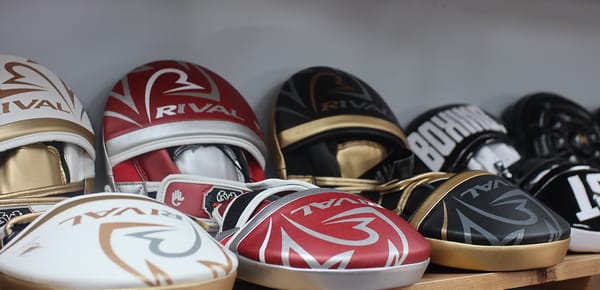
Required for coaches and pad holders: the Rival Body Protector.
- Body protector
Required for female amateur competition:
- Chest protector
This is the core kit list for any boxer training in the UK. The rest of this guide covers each category, when you need it, what to look for, and where to find detailed buying guidance.
Why Protective Gear Defines Your Boxing Career
Every session you step into the gym, your body absorbs impact. The gear you wear determines whether that impact builds you up or breaks you down. Proper boxing protective gear does not just reduce injury. It gives you the confidence to train harder, spar more freely, and develop faster without holding back from exchanges out of self-preservation.
This guide covers every category of boxing protective equipment: mouthguards and gum shields, hand wraps, headgear, groin protectors, body protectors, and chest protectors for female fighters. Each section explains what the gear does, when you need it, and links to our dedicated guides for full product breakdowns and buying recommendations.
Boxing Protective Gear: Quick Overview
| Gear | Purpose | Mandatory? | When You Need It | Price Range |
|---|---|---|---|---|
| Mouthguard / gum shield | Protects teeth, jaw, reduces impact transfer | Yes -- every session | From your first training session | £8 to £30+ |
| Hand wraps | Stabilises wrist and small hand bones | Yes -- every session | From your first training session | £5 to £25+ |
| Boxing headgear | Reduces cuts, bruising, and surface trauma | Yes -- sparring and competition | First sparring session onwards | £20 to £200+ |
| Groin protector | Protects pelvic region from body shots | Yes -- sparring and competition | First sparring session onwards | £20 to £195+ |
| Body protector | Absorbs punch force during pad work | No -- but useful for coaches and pad holders | Any session involving pad holding | £75 to £390+ |
| Chest protector (female) | Protects breast tissue | Yes -- female amateur competition | Female fighters from first spar | Varies |
Mouthguards and Gum Shields
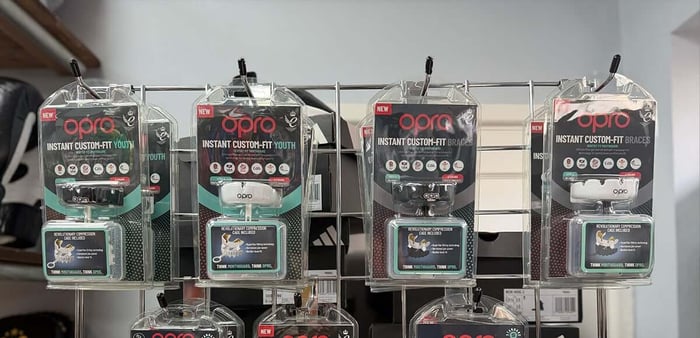
A mouthguard, or gum shield as it is known in most UK gyms, is the piece of protective gear you wear every single session. It absorbs and distributes impact across the jaw, protecting your teeth and reducing the force transferred to the skull on clean shots. The difference between a well-fitted gum shield and a cheap, loose one shows up when it matters most.
Boil-and-bite guards mould at home using hot water and cover the full range from entry-level to advanced. Instant custom-fit guards like the OPRO Instant Custom-Fit Mouthguard use a fitting cage for a mould closer to a dentist's custom impression. Brands like the SafeJawz Intro Series Mouthguard and OPRO cover both categories with a clear progression from Beginner to Competition level.
For our full ranked breakdown including a SafeJawz vs OPRO comparison table, picks for fighters with braces, and a step-by-step fitting guide, read our best boxing mouthguards and gum shields for sparring and competition guide.
Hand Wraps
Every punch you throw passes force through 27 small bones in your hand and wrist. Hand wraps compress those bones into a stable unit, protect the knuckles, and hold the wrist in proper alignment on impact. No glove, however padded, replaces that structural support.
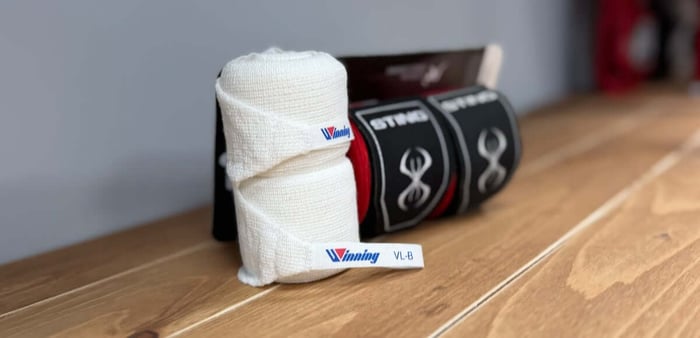
Wraps come in three main types: traditional cotton, semi-elastic Mexican-style, and fast wraps or inner gloves for quick sessions. Length matters too. STING Elasticised Hand Wraps 3m And 4.5m in 3m suit lighter training and smaller hands, while 4.5m is the standard for Sparring, Bag Work, and Competition.
For a full guide covering every material type, a top picks table, and a step-by-step guide on how to wrap your hands for boxing correctly, read our best boxing hand wraps guide.
Boxing Headgear
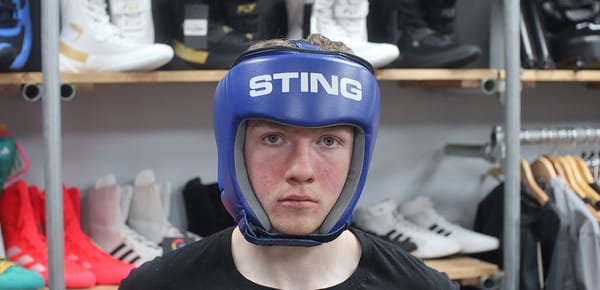
Headgear doesn’t make you invincible, but the Rival RHG2 Hybrid Headgear cuts down on bruises and surface facial trauma, protecting your eyebrows, ears, and cheekbones to keep you sparring longer.
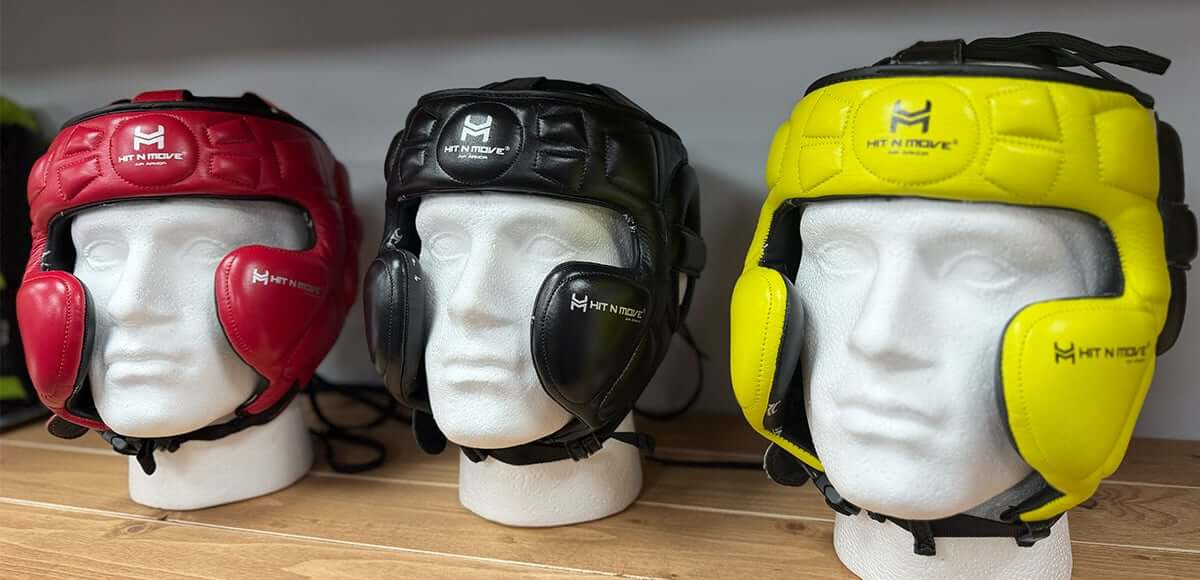
Three styles serve different needs. Open-face headgear offers the widest field of vision. Cheek-protector headgear adds padded panels to the cheekbones without a face bar. Full-face headgear provides maximum coverage and suits fighters recovering from facial injuries or those in very hard sparring.
For our full ranked guide including a comparison table, concussion research, and competition approval information, read our best boxing headgear for sparring and competition guide.
Groin Protectors
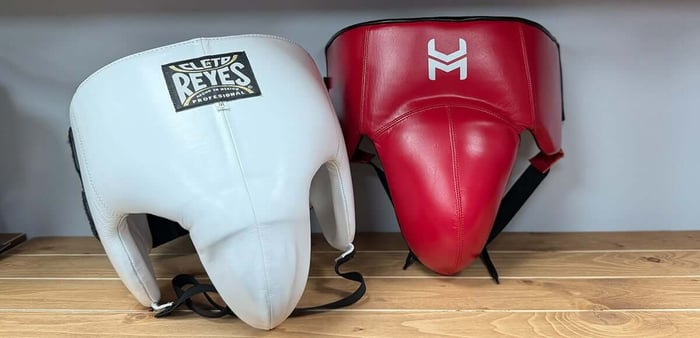
A groin protector, also called a foul protector or no-foul protector, is mandatory in competition and essential in sparring. Accidental low shots are common in close-range exchanges. The difference between a quality guard that stays in position and a cheap one that shifts is the difference between a session that continues and one that ends early.
Options range from entry-level guards for beginners to full leather professional foul protectors with extended kidney coverage for hard sparring.
For our ranked picks, a brand comparison table, and competition approval guidance, read our best boxing groin guards and foul protectors guide.
Body Protectors
Body protectors are worn by coaches and pad holders to absorb the force of punches during pad work sessions. A coach working multiple fighters across a full training day absorbs considerable volume. Without a quality body protector, that accumulates into real physical wear. A good coaching body protector distributes force across layered foam and a rigid or semi-rigid shell, protecting the ribs, solar plexus, and lower abdomen through extended sessions.
For our full guide covering what separates a professional-grade coaching body protector from an entry-level one, along with ranked picks, read our best boxing body protectors guide.
Chest Protectors for Female Boxers
Chest protectors protect breast tissue from the impact of punches during sparring and competition. For female fighters in amateur competition, they are mandatory under current governing body rules. Most UK gyms also require them for sparring. A proper chest protector fits securely under a boxing vest without restricting arm movement or breathing.
Female-specific groin guards are also available and increasingly required at competition level. For female fighters preparing for competition, browse our amateur boxing equipment collection for approved options.
A Note on Boxing Gloves
Boxing gloves are covered in detail across our dedicated gloves guides. Within this protective gear guide, gloves are mentioned in context only. Browse our boxing gloves collection for sparring gloves, bag gloves, and competition options matched to your weight and training type.
Boxing Protective Gear by Training Type
Your gear requirements change depending on what you are doing in any given session.
Bag work: Hand wraps and bag gloves are the core requirement. A mouthguard is good practice even without a partner.
Pad work: Hand wraps, gloves, and a mouthguard for the fighter. Coaches holding pads should consider wearing a body protector. The force of full-power shots across a long pad session adds up quickly.
Sparring: This is where the full kit becomes mandatory. Hand wraps, 16 oz sparring gloves, a gum shield, boxing headgear, and a groin protector are the minimum. Female fighters also need a chest protector.
Amateur competition: Approved gloves for your weight division, a mouthguard, and a groin protector. Junior and female competitors must wear approved headgear. Female fighters also need a chest protector. All gear must meet current World Boxing standards. England, Wales, and Scotland are members of World Boxing, which now governs amateur boxing in those nations.
Professional competition: Approved gloves, a mouthguard, and a groin protector. No headgear for bouts. Glove weight set by the sanctioning body, typically 8 oz to 10 oz.
What Protective Gear Do You Need at Every Stage?
Beginners (first six months): Your core requirement is a mouthguard or gum shield, two pairs of hand wraps, and training gloves. Headgear and a groin guard can wait until your coach clears you for contact.
Intermediate (starting to spar): Before your first sparring session you need boxing headgear, a groin protector, a performance-grade gum shield, and a dedicated pair of 16 oz sparring gloves. Female fighters also need a chest protector. Do not step in with a partner missing any of these.
Advanced and competing: Every piece of protective gear must be matched to your training load. A professional-grade gum shield, premium headgear, a leather foul protector, and quality body protection for coaches become essential rather than optional. Gear that compresses, shifts, or breaks down under intense training becomes a liability.
Coaches and trainers: A quality body protector is optional but if you are holding pads regularly highly recommended. Absorbing hundreds of shots per session without one is a fast route to chronic rib and torso damage.
Common Boxing Protective Gear Mistakes
These are the errors that cost fighters and coaches training time and cause preventable injuries. For a detailed look at how each piece of gear reduces specific injury risks, read our boxing gear to prevent injuries guide.
Sparring in bag gloves: Bag gloves do not have the padding density required to protect you or your partner during sparring. Always use dedicated 16 oz sparring gloves for any contact work.
Skipping hand wraps: The most common mistake in gym boxing. Wraps are not optional. Without them, the structural support your hands need is missing regardless of how good your gloves are.
Using a low-quality or poorly fitted gum shield: A cheap gum shield that does not mould properly offers a fraction of the protection of a well-fitted one. The difference in cost is small. The difference in protection is not.
Not replacing worn gear: Compressed headgear foam, degraded mouthguard material, and a groin guard that has lost its rigidity all offer the appearance of protection without the substance. Gear has a lifespan. Replace it on schedule.
Ignoring groin protection until it is too late: Many gym fighters skip the groin guard until an accidental low shot teaches them otherwise. Do not learn this lesson the hard way.
Buying gear at the wrong tier for your training intensity: Entry-level gear is appropriate for beginners doing bag work. It is not adequate for fighters sparring hard three or more times per week. Buy at the tier that matches how you actually train.
Competition Regulations: Amateur and Professional
Amateur competition in the UK is now governed by World Boxing. England Boxing, Welsh Boxing, and Scottish Boxing are all members of World Boxing, which sets the current standards for equipment in sanctioned amateur bouts. These cover approved gloves, headgear requirements for junior and female competitors, mouthguards, groin protectors, and chest protectors for female fighters. See our amateur boxing equipment collection for competition-approved options.
At international level, some competitions may still fall under IBA jurisdiction depending on the event and federation. Always confirm the governing body for your specific competition before purchasing approved gear.
Professional boxing is governed by separate sanctioning bodies. Fighters wear approved gloves, a mouthguard, and a groin protector for bouts. No headgear. Glove weight is set by the sanctioning body for the bout.
Understanding which body governs your competition before you buy protects you from purchasing gear that will not pass equipment check on the day.
Where to Go Next
Browse by category or read the dedicated guide for each piece of protective gear:
Mouthguards and gum shields: best boxing mouthguards and gum shields for sparring and competition guide | boxing mouthguards collection
Hand wraps: best boxing hand wraps guide (includes step-by-step wrapping technique) | hand wraps and tape collection
Headgear: best boxing headgear for sparring and competition guide | boxing headgear collection
Groin guards and foul protectors: best boxing groin guards and foul protectors guide | groin guards collection
Body protectors: best boxing body protectors guide | boxing protective gear collection
Female competition gear: amateur boxing equipment collection
Full protective gear range: Browse the full boxing protective gear collection -- every product is selected for real sparring and fight preparation, not casual training.
FAQs
What protective gear is essential for boxing sparring?
The minimum for any sparring session is boxing headgear, a mouthguard or gum shield, a groin protector, hand wraps, and 16 oz sparring gloves. Female fighters also need a chest protector. Most UK gyms enforce this list and will not allow contact without it.
Do professional boxers wear headgear in training?
Yes. Headgear is standard during professional sparring to limit cuts and facial damage between camps. It is removed for bouts, but in the gym it remains part of daily training at every level.
What is the difference between a mouthguard and a gum shield?
Nothing. In UK boxing, the two terms are used interchangeably. Both refer to the protective device worn over the upper teeth during training and competition.
What groin protection do female boxers need?
Female fighters do not use traditional cup-style guards. Instead, they wear a pelvic protector designed for female anatomy, providing padded coverage over the lower abdomen and pelvic region. Some sanctioning bodies mandate these for competition.
What governing body now oversees amateur boxing in England, Wales, and Scotland?
World Boxing. England Boxing, Welsh Boxing, and Scottish Boxing are all members of World Boxing, which now sets the standards for equipment and competition in sanctioned amateur bouts across those nations.
What are the most common boxing protective gear mistakes?
Sparring in bag gloves, skipping hand wraps, using a poorly fitted gum shield, not replacing worn gear, neglecting groin protection, and coaches holding pads without a body protector. Each creates a specific, preventable injury risk.